
Collectors pay for controlled provenance. Sir David Beckham’s DB Ventures is seeking at least $41 million from Coty, alleging his fragrances appeared in a gas-station bargain bin and at Poundland. Coty denies the claims and has moved to dismiss.
Provenance is not a mood board. It is a chain: who made the bottle, who was allowed to sell it, and which room the buyer is supposed to meet it in. The Beckham fragrance provenance fight now sitting in New York is a stress test of that chain, even for collectors who would never shop a footballer’s eau de toilette.
In April 2026, DB Ventures, the company behind Sir David Beckham’s commercial rights, sued Coty Germany in New York Supreme Court for a minimum of $41 million (around £31 million). Coverage this week from the Associated Press, USA Today, and The Fashion Law sets out the allegation: an estimated $24 million, or $24.25 million in The Fashion Law’s reading, of Beckham-branded stock moved through unapproved or unconsulted channels at liquidation-level discounts, which is how, the complaint says, goods carrying his name were found in a gas-station bargain bin. Poundland, the British discount retailer, is also named. Coty denies those Poundland sales, disputes any breach of the 2016 licence, and has asked the court to throw the case out.
A numbered bottle is a contract with the buyer
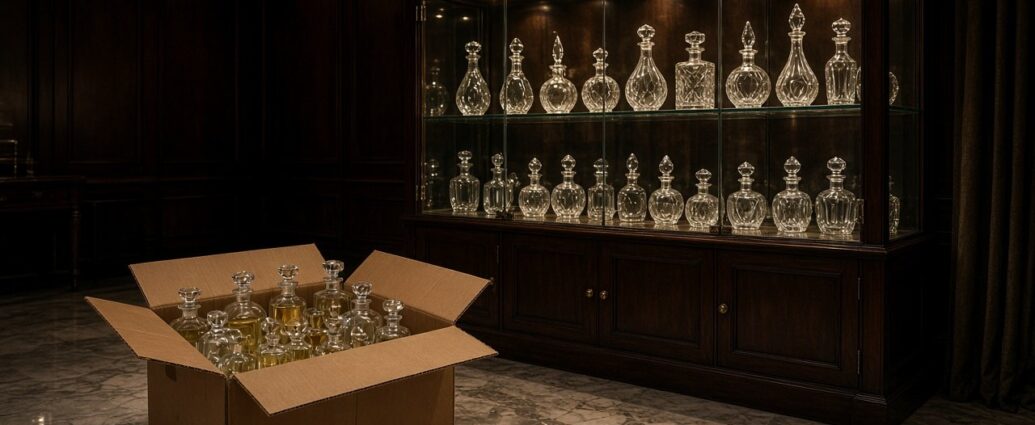
Look at the other end of the same European shelf. Lalique’s 2026 Reverie crystal flacon, launched as a 500-piece signed and numbered edition of Lalique de Lalique Extrait de Parfum, is built so a collector can point to a cap, a number, and a maison. Our file on the Lalique Reverie flacon limited to 500 pieces and our guide to numbered heirloom decanters and cases are about that paper trail. The moment a prestige scent is seen in a gas-station basket, the trail breaks, whether or not the juice itself has changed. Business of Fashion noted that many Beckham bottles sell in the United Kingdom for about £20, so this is not a fight about four-figure crystal. It is a fight about the aisle.
The 2016 licensing agreement, as reported by The Fashion Law, lets Coty sell through department stores, chain stores, mass merchandisers, and e-commerce as it reasonably determines, while supermarket and hypermarket channels need prior approval, and DB Ventures has notice and consultation rights on strategy and sub-distributors. The complaint leans on a separate duty to protect the brand’s “good image.” Coty says consultation is not a veto, and that it cannot control every later resale. It also says the case is a device to exit before the licence ends in March 2028, after Interparfums announced a 20-year exclusive deal due to start on April 1, 2028, or earlier if Coty’s rights end. Both stories can be true in the pleadings. Neither is a finding.
Collectors and maisons should still watch the docket, because channel discipline is how limited editions keep their price. For the talent-side numbers behind European names, use the verified European talent fee index. For houses, estates, and rooms that still treat access as part of the object, see the World’s Most Coveted Estates & Hospitality pages, and the wider limited-edition luxury brand set on this desk. European ateliers, hotels, and venues with a genuine controlled-release story can book Verified Hospitality Listings ($2,500/yr) or buy a Sponsored Brand Spotlight in the $349 to $499 band. The November 24, 2026 governance window at AI Polymath Bidding is open for principals who treat provenance as a capital question, not a caption.
FAQ
What is the provenance issue in the Beckham Coty claim?
DB Ventures alleges that Beckham-branded fragrances were sold through unapproved, discount channels, including a gas-station bargain bin and Poundland, which it says associated the name with dollar-store prices. Coty denies the Poundland allegation and says the licence gives it discretion over many distribution channels. No court has decided the facts.
How does this compare with a numbered collector flacon?
A limited, documented edition, such as Lalique’s 2026 Reverie crystal flacon, capped at 500 signed and numbered pieces, is built so buyers can trace where the object came from. A bargain-bin sighting, if proven, is the opposite signal: the object has left the controlled channel.
How much is being claimed, and where?
A minimum of $41 million, around £31 million, was claimed in a New York Supreme Court filing from April 2026, not in the UK High Court. The Associated Press, USA Today, and The Fashion Law set out the papers this week. The sum is a claim, not an award.
Sources named in text: Associated Press, USA Today, The Fashion Law, and Business of Fashion (17 to 18 November 2026); Interparfums timing as reported by The Fashion Law and The Industry Beauty. Facts checked 17 to 18 November 2026.