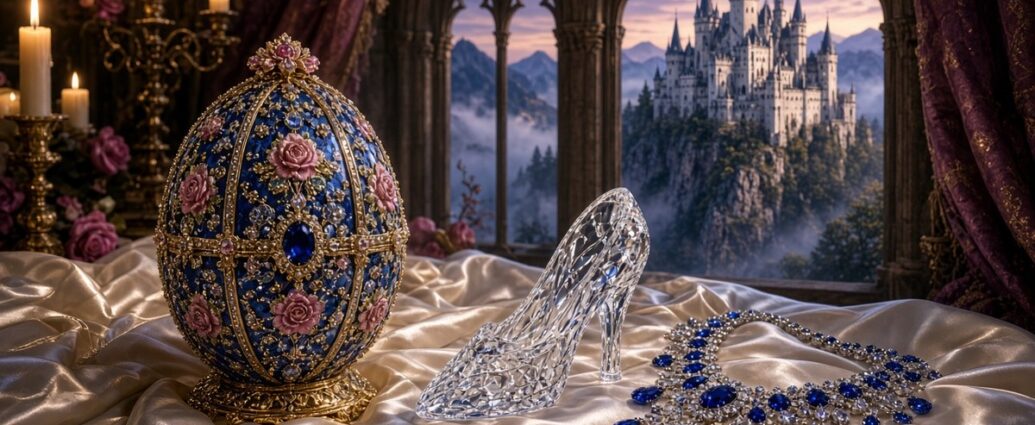
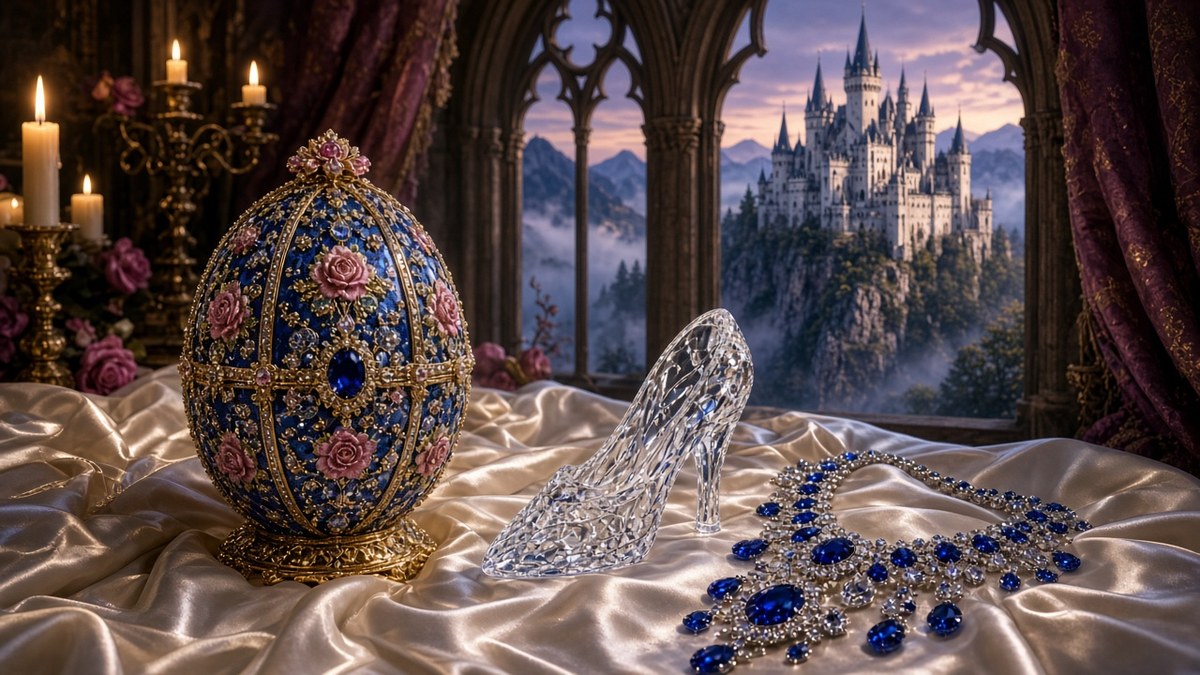
Every fairy tale needs a treasure: a jewel that glows in the dark, an egg with a secret inside, a castle on a cloud. Europe’s royal fairy tale treasures are real, and their stories sparkle brighter than fiction. Welcome to Fairy Tales, the Limited Editions Europe column where royal myths and legendary objects meet one of one luxury. Here are seven treasures, with legend marked as legend.
1. The Cullinan Diamond, 1905
In 1905 miners in South Africa found a rough diamond of 3,106 carats, the largest gem quality diamond ever discovered. Named after mine owner Thomas Cullinan, it was presented to King Edward VII and cut into nine major stones. The largest, Cullinan I, at about 530 carats, now crowns the Sovereign’s Sceptre with Cross in the British Crown Jewels.
2. Fabergé’s First Imperial Egg, 1885
For Easter 1885, Tsar Alexander III asked jeweller Peter Carl Fabergé to make a surprise for Empress Maria Feodorovna. The plain white enamel Hen Egg opened to reveal a golden yolk, inside it a golden hen, and inside that, originally, a tiny crown and ruby pendant. Fifty imperial eggs followed, each a fairy tale in enamel and gold.
3. The Hope Diamond (Legend and History)
The deep blue Hope Diamond weighs 45.52 carats and has a legend of a curse attached to it, a tale historians largely trace to newspaper storytelling and clever sales talk. The facts are dazzling enough. In 1958 jeweller Harry Winston gave it to the Smithsonian, famously sending it by registered mail. It now draws millions of visitors in Washington.
4. Royal Fairy Tale Treasures in Stone: Neuschwanstein
From 1869, King Ludwig II of Bavaria built Neuschwanstein Castle on a rugged hill as a tribute to the operas of Richard Wagner. Its white towers are widely credited as an inspiration for the castle in Disney’s Sleeping Beauty. Today it welcomes well over a million visitors a year.
5. Empress Sisi’s Diamond Stars
Empress Elisabeth of Austria, known as Sisi, wore diamond star ornaments in her famously long hair, captured in Franz Xaver Winterhalter’s 1865 portrait. The stars are linked to the Viennese jeweller Köchert, and versions are still crafted for brides who want an imperial touch.
6. La Peregrina, the Wandering Pearl
Found in the Gulf of Panama in the sixteenth century, La Peregrina was worn by Spanish queens and by Mary I of England. Centuries later, Richard Burton gave it to Elizabeth Taylor, and it sold at Christie’s in 2011 for about $11.8 million. Read the full romance in the Time column’s Elizabeth Taylor love stories.
7. Marie Antoinette’s Pearl Pendant
In 2018 a natural pearl and diamond pendant once owned by Queen Marie Antoinette sold at Sotheby’s in Geneva for about $36 million, many times its estimate. The queen had reportedly sent her jewels away for safekeeping, and they stayed hidden in a royal family collection for two centuries.
The Future Angle: Treasures of 2126
Tomorrow’s royal fairy tale treasures may be lab grown diamonds cut by robots, digital crowns that live on the blockchain or jewels made from meteorites. The magic will be in the story, as it always was. Continue with our Fabergé Winter Egg record story.
Visit the future: send us your idea
Which treasure of today will become a fairy tale in 2126? Send the Fairy Tales desk your idea for a future legend. Send us your idea.
FAQ
How big was the Cullinan Diamond?
The Cullinan Diamond weighed 3,106 carats in the rough when it was found in South Africa in 1905, making it the largest gem quality diamond ever discovered. It was cut into nine major stones. The biggest, Cullinan I, weighs about 530 carats and is set in the Sovereign’s Sceptre with Cross.
Is the Hope Diamond really cursed?
The curse is a legend. Historians generally trace the story to early twentieth century newspaper tales and sales talk that made the stone more intriguing to buyers. The 45.52 carat blue diamond was donated to the Smithsonian by Harry Winston in 1958 and is one of the most visited museum objects in the world.
What was the first Faberge imperial egg?
The first imperial egg was the Hen Egg, made for Easter 1885 when Tsar Alexander III gave it to Empress Maria Feodorovna. Its white enamel shell opens to a golden yolk with a golden hen inside. Fabergé went on to make fifty imperial Easter eggs for the Russian royal family.
Keep reading
- 6 Fairy Tales Reimagined as Luxury Legends, From Cinderella to Snow White, in 2026
- 7 Grand Hotels in History That Invented Luxury Travel, From Raffles to The Peninsula, in 2026
- One of One: The Rarest Objects Icons Actually Own
Sources named in text: Royal Collection Trust; Fabergé archives; Smithsonian National Museum of Natural History; Bavarian Palace Administration; Christie’s; Sotheby’s.