
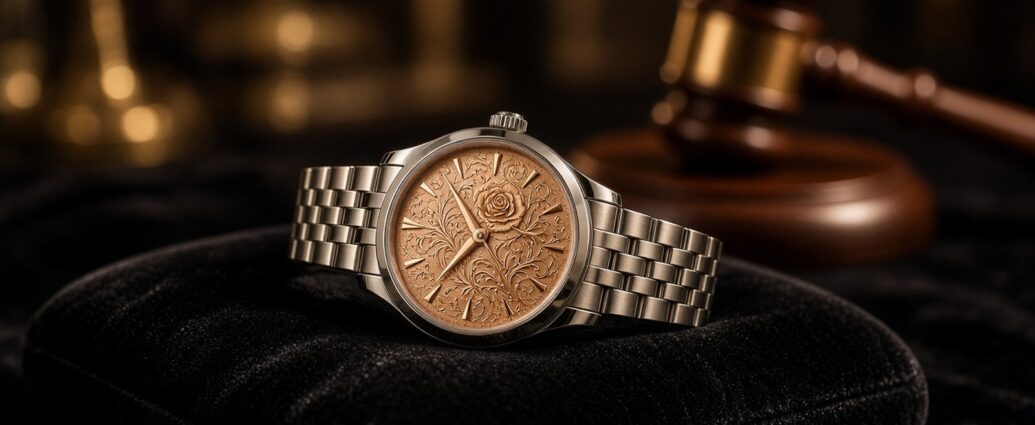
A limited edition is a number. A one of one luxury object is a refusal of the number. It cannot be reissued, resized, or quietly run on again next season, and that is why the phrase has become the most abused label in luxury. This column will use it strictly: for objects that are unique in the craft record, or that have a documented, singular life with an owner the public already knows.
The cleanest modern example is not a watch. It is a bag that began as a unique commission and became a category. In 1984, Hermès made a leather tote to the specifications of the singer and actress Jane Birkin, after she sat next to then-chief executive Jean-Louis Dumas on a flight and described a bag that would hold her things and still shut. The original, bearing her name, is a one of one.
In 2025 it became the most expensive handbag ever sold, at 8.6 million euros, a sale Limited Editions Europe has already examined in full in its report on Jane Birkin’s original Hermès Birkin. Every later Birkin is a descendant. Only one object is the source. That distinction is the whole sport.
A close cousin, and almost as strict, is the object that was never meant to be a series at all. The Fabergé Winter Egg, sold this season for 22.9 million pounds and a new world record, is not a celebrity’s everyday possession.
It is a unique imperial object that has now changed hands again, a story told in our file on the Winter Egg that reset the market. Unique decorative objects of that rank sit in the same conversation as unique watches: they are not worn to a dinner to be noticed, they are held, insured, and occasionally offered to a room that can prove the uniqueness in a catalogue essay.
One of one luxury objects: When a living icon actually owns the unique piece
Auction uniqueness is easier to prove than uniqueness in a private wardrobe. Catalogues are sworn documents, of a kind. Private closets are not. One of One will therefore be careful with claims that a star “owns the only one.” A commission can be documented: a watchmaker’s ledger, a maison statement, a racing-team edition with a named delivery. A social-media close-up cannot. The current season has been rich in the first kind of evidence.
In Geneva, Christie’s brought in $203 million and reset its own watch-auction record, with F.P. Journe and Patek Philippe at the centre of the room, as Luxury Power Lists has reported in its account of the $203 million Geneva watch sales. Some of those lots were unique or effectively unique. Their new owners will, in many cases, never be named. The object is public. The icon, this time, may be the object itself.
Limited, even extremely limited, is not the same test. A Panerai Luna Rossa GMT Experience Edition of 30 skeleton watches, or a run of 15 or 20 pieces from an independent maker, is scarce enough to matter, and scarce enough for this site. It is not one of one.
The phrase should be reserved for the object that has no twin, including the original Birkin, a unique enamel dial, a converted racing car with a single chassis number, or a jewel with a documented, unrepeatable stone. When a living name can be attached to that object without guesswork, the column will attach it. When the name is only a rumour, the object can still be the story, and the rumour will stay in the corridor.
What the column is for
To separate the unique from the merely small. Luxury marketing now uses “one of one” the way it once used “iconic,” as a volume knob. Collectors, and readers, need the quieter test: is there another, and can you prove there is not?
The original Birkin passes. A 30-piece collaboration does not, however beautiful, and however long the wait for a delivery, a wait this site has also begun to measure, including the 18-month queue on a 48-watch independent piece in our report on the Qian GuoBiao Facing The Sky 2.0 Titanium. One of One will keep walking that line, object by object, with the catalogue and the maison on the table, and with no invented provenance.
Frequently Asked Questions
What does ‘one of one’ mean in this column?
An object that is unique in the craft or ownership record: a single commission, a unique stone or dial, a single chassis, or a documented original, such as Jane Birkin’s first Hermès Birkin. A numbered limited edition, even of 15 or 30 pieces, is scarce, not one of one.
Is Jane Birkin’s original bag really unique?
Yes. It was a 1984 Hermès commission made for her after a conversation with Jean-Louis Dumas, and it later sold for 8.6 million euros, a world record for a handbag, as Limited Editions Europe has reported. Later Birkins are a production family. The original is a single object.
Will the column name celebrities as owners if the sale was anonymous?
Only when the ownership is documented. Many unique lots now sell to unnamed buyers. In those cases the object, the price and the catalogue record are the story, not a guessed owner.