
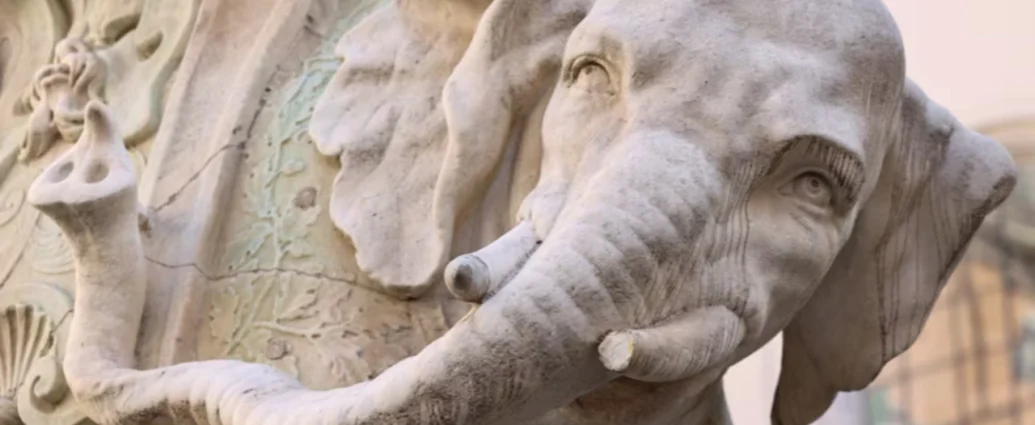
A celebrated marble elephant sculpture inspired by Baroque master Gian Lorenzo Bernini has been damaged in central Rome after its left tusk was discovered snapped off at the base of the monument. Authorities confirmed the incident occurred in Piazza della Minerva, one of the city’s historic squares.
The damaged tusk was found on Monday night, prompting police to launch an investigation. Officials are reviewing surveillance footage from the area to determine whether the breakage was the result of vandalism or caused by structural weakness following weeks of unusually heavy rainfall in the Italian capital.
Cultural Outrage Over the Damage
Italy’s Culture Minister Alessandro Giuli strongly suggested the damage was intentional. In a public statement, he described the act as an “absurd act of barbarity” and condemned what he called another attack on Italy’s priceless artistic heritage.
“It is unacceptable that once again the nation’s artistic and cultural heritage must suffer such serious damage,” he said, underlining the importance of protecting historic monuments that form part of Italy’s identity and global legacy.
The Story Behind the “Elefantino”
The statue, affectionately known as the “Elefantino” or “little elephant,” dates back to the 17th century. While the concept was created by Bernini, the sculpture itself was executed in 1667 by Ercole Ferrata based on Bernini’s design.
The elephant supports an ancient Egyptian obelisk on its back, creating one of Rome’s most distinctive artistic landmarks. The combination of Baroque artistry and ancient symbolism has made the monument a favourite among tourists and art historians alike.
Located just steps away from the iconic Pantheon, the sculpture stands in one of the busiest and most visited parts of the city. Its proximity to major attractions ensures a steady flow of visitors throughout the year.
Not the First Incident
This is not the first time the monument has suffered damage. In November 2016, the tip of the same tusk was found broken. Restoration experts later reattached the fragment during conservation work, restoring the statue to its original form.
The latest break has once again raised concerns about the vulnerability of historic monuments exposed to environmental wear and potential vandalism. Rome, home to countless ancient landmarks, faces ongoing challenges in balancing preservation with the realities of tourism and urban life.
Investigation Underway
Authorities have not yet confirmed the cause of the damage. Police are carefully examining video footage from nearby cameras to determine whether the tusk was deliberately broken or weakened due to weather conditions. Recent heavy rains may have contributed to structural stress, though officials have not ruled out foul play.
Restoration specialists are expected to assess the statue soon to determine the extent of the damage and outline the repair process. Given the monument’s historical and artistic significance, conservation efforts are likely to be swift and meticulous.
The incident has reignited debate over the protection of cultural treasures in Italy, a country that holds one of the world’s richest collections of art and architecture. As investigations continue, the hope is that the beloved Elefantino will soon be restored to its former glory.


1 Comment