

While global heavyweights like Art Basel and Frieze expand into new territories with major launches in Qatar and Abu Dhabi, a different kind of experiment is unfolding in Los Angeles. Instead of betting on scale, collector R Parmar is testing whether a small, collaborative art fair can leave a lasting mark on the local market.
This week marks the debut of Enzo Art Fair in Echo Park, positioned alongside established LA events such as Frieze Los Angeles, held at Santa Monica Airport, and Felix LA, staged at the Hollywood Roosevelt Hotel. Also in the mix is Post-Fair in Santa Monica, now entering its second year.
Unlike its larger counterparts, Enzo is intentionally compact. Hosted at Parmar’s warehouse-style venue, Alabaster Projects, the fair features nine New York galleries, including Margot Samel, Magenta Plains, ILY2, Bank, Laurel Gitlen, and Silke Lindner. Running February 26–28, with a VIP preview on February 25, Enzo aims to offer something different during the busy Frieze Week calendar.
A Fair Born From Contraction
The idea for Enzo emerged organically. Last summer, Parmar visited galleries in New York’s Chinatown and Lower East Side and sensed a growing strain in the art ecosystem. Conversations with gallerists revealed financial pressures and logistical challenges that have intensified in recent years.
Instead of building another high-cost fair model, Parmar envisioned something cooperative. Enzo eliminates participation fees for galleries and offers free entry to visitors with RSVP. Shipping costs are shared among participating dealers, reducing the financial burden that often accompanies fair participation.
Though experimental, the concept has been met with enthusiasm. Parmar describes it not as disruptive, but as an alternative—closer in spirit to certain European satellite fairs known for their relaxed, socially driven atmosphere.
A European-Style Experience in Echo Park
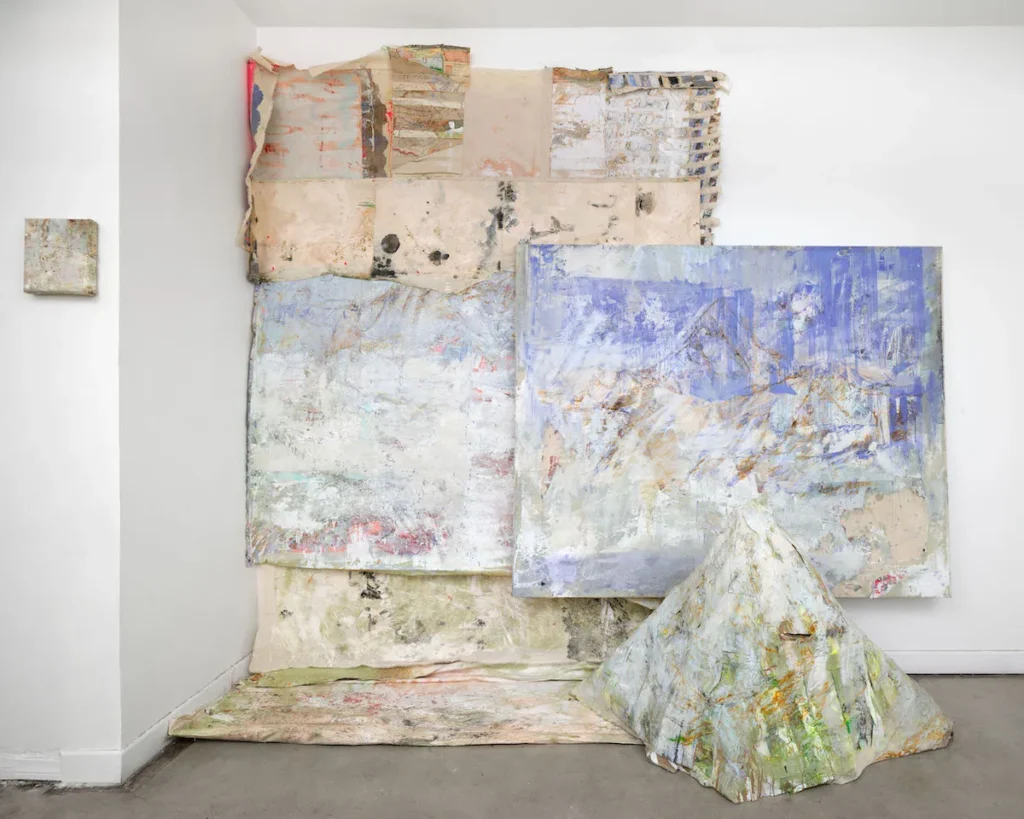
Parmar draws inspiration from smaller European fairs that feel freer and more community-oriented than mega-events. Enzo occupies approximately 5,000 square feet, with walls removed to create a unified exhibition environment. There are no rigid booth structures. Instead, the layout flows openly, with subtle delineations between galleries.
The goal is to slow things down. With just nine galleries, visitors can engage deeply with the art rather than rushing through endless aisles. Parmar hopes the fair feels airy, harmonious, and less transactional than the typical high-pressure art fair setting.
Why the East Side Matters
Location is central to Enzo’s mission. Major fairs in LA traditionally cluster on the Westside, particularly in Santa Monica. Parmar believes the East Side—home to many artists, creatives, and younger collectors—deserves its own fair.
Echo Park offers walkability, proximity to Echo Park Lake, and neighborhood cafés, creating a more relaxed environment. For visitors traveling from New York or Europe during winter, the setting offers a pleasant contrast: coffee, sunshine, and art within a compact radius.
Convenience also plays a role. Traffic to Santa Monica can be daunting. Enzo provides an alternative for those who may hesitate to commit to long drives and parking fees, without compromising on the quality of galleries presented.

Rethinking the Fair Model
By removing participation fees, Parmar is quietly testing whether a collector-funded or collector-supported approach could offer a sustainable alternative. The art fair circuit has grown increasingly crowded and costly, with galleries shouldering expenses for logistics, shipping, staffing, and hospitality.
Parmar acknowledges that galleries still incur travel and accommodation costs, but hopes Enzo simplifies at least part of the equation. He sees the fair as a learning process—one that could evolve if successful.
Future ambitions include collaborations with hotels, artist talks, and shuttle services connecting East and West Side fairs. For now, Enzo remains intentionally focused and manageable.
Beyond the Fair: The Vision for Alabaster Projects
Enzo also aligns with Parmar’s broader ambitions for Alabaster Projects. Initially launched as a space for independently curated exhibitions, the venue has hosted shows organized by guest curators, including collaborations with Joachim Castaneda and Hiroko Maruyama of Soot Tokyo.
Looking ahead, Parmar envisions transforming Alabaster into a curatorial project space that empowers emerging curators—particularly those from abroad—to experiment freely. Enzo may serve as an extension of that philosophy: collaborative, flexible, and artist-centered.
In a year defined by global expansion and blockbuster fairs, Enzo offers a counterpoint. Small in scale but ambitious in spirit, it suggests that meaningful impact in the art world does not always require monumental size—sometimes, it simply requires a fresh approach.

3 Comments