
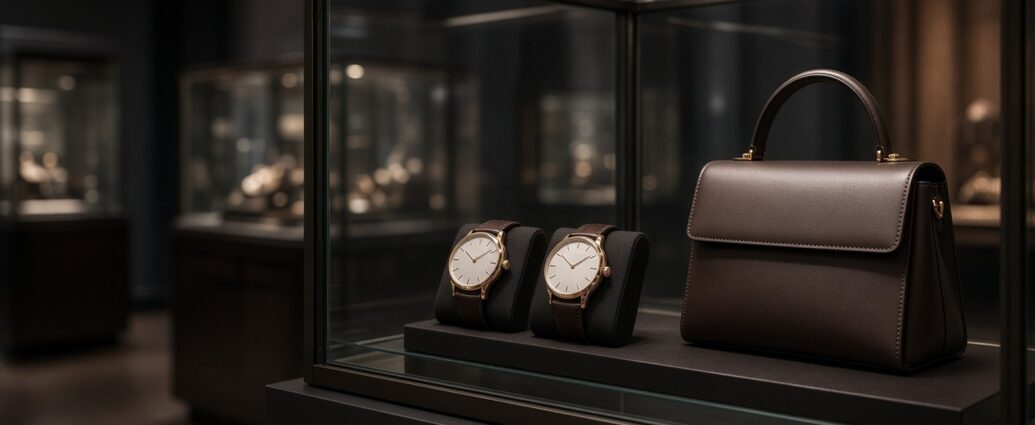
Limited editions are made to be scarce, and scarcity is what auction rooms trade on. A watch numbered “7 of 20”, a signed print from an edition of 50, a single-cask whisky or a handbag made in one exotic skin can all change hands for far more than the original retail price, but only if the buyer pays the right fees, the seller picks the right room and the paperwork stands up. This guide explains how limited editions are bought and sold at auction and on the resale market, in Europe and beyond, with the season’s key dates and the fees you should expect to pay.
Why limited editions perform at auction
Auction houses rely on three things: rarity, provenance and condition. A limited edition delivers the first by design. The maker caps production, numbers each piece and usually keeps records, so a buyer can check that a lot really is “number 92 of 99” and not a later copy. Provenance then adds the story: who owned it, where it has been shown and whether it comes with its box, papers or certificate. Condition decides the final price, because collectors pay heavily for pieces that are unworn, unopened or unrestored.
The demand is real. Phillips, in association with Bacs & Russo, reported that its spring 2026 sales in Geneva, Hong Kong and New York realised more than US$235 million, with three watches selling for over US$10 million each, according to the Phillips press release for its Geneva Watch Auction: XXIV.
The main categories, ranked by auction depth
1. Watches: Rolex, Patek Philippe, Richard Mille and the independents
Watches are the deepest limited-edition market, and Geneva is its capital. Each spring and autumn the four major watch auctioneers, Phillips, Christie’s, Sotheby’s and Antiquorum, hold sales within days of each other. Limited runs from Patek Philippe and Rolex sit beside numbered pieces from independent makers such as F.P. Journe, whose prices have climbed sharply.
Christie’s says its May 2026 Rare Watches sale in Geneva achieved CHF 33.1 million with a 99% sell-through rate. In the same sale a 1990 Cartier Crash made in London set the highest price ever paid for a Cartier wristwatch, at more than US$2 million, according to Christie’s own preview of its November sale.
Independent and modern makers sit alongside the classics. Sotheby’s November Geneva Important Watches sale includes a George Daniels Millennium from 2001 estimated at CHF 300,000–600,000, while Christie’s has a 1948 Patek Philippe reference 1518 estimated at CHF 500,000–1 million.
2. Handbags: Hermès at Christie’s and Sotheby’s
Handbags have become a core auction category, led by Hermès Birkins and Kellys. Online sales let new buyers in at more modest levels. Christie’s September 2026 online handbag sale in New York included a matte white Himalaya Niloticus crocodile Birkin 35 estimated at US$90,000–120,000, according to Christie’s press release. In Europe, Christie’s “Handbags Online: The Paris Edit” runs from 30 October to 13 November 2026. To see why a Birkin is so scarce in the first place, read our explainer on what makes something a limited edition.
3. Sneakers and streetwear: StockX and Sotheby’s
Sneakers trade on two levels. Day-to-day resale runs through marketplaces such as StockX, which acts as a middleman and checks each pair before it reaches the buyer. At the top end, auction houses sell game-worn and historic pairs. Sotheby’s sold Michael Jordan’s “Dynasty Collection”, six Air Jordans worn in each of his six championship-clinching NBA Finals games, for US$8,032,800 in February 2024. That set a world auction record for sneakers, according to Sotheby’s.
4. Wine and whisky: Macallan and the single-cask market
Fine wine and spirits sell by the bottle, the case and sometimes the barrel. Macallan holds the whisky record. A Macallan Valerio Adami 1926, one of only 12 bottles with the Adami label, sold at Sotheby’s London in November 2023 for £2,187,500, according to Sotheby’s. Buyers should know that wine and spirits often carry their own premium schedule. At Christie’s the standard wine premium is 25%, lower than the house’s general rate.
5. Limited cars: RM Sotheby’s and the Paris winter sales
Limited-production cars are sold at dedicated auctions, often during motor shows. RM Sotheby’s has confirmed its Paris Auction for 3 February 2027 at Les Salles du Carrousel. Early consignments include a Porsche 959 “Komfort” estimated at €2.3 million–€2.8 million, according to the RM Sotheby’s sale page. The other Paris car sales that week are covered in our guide to the biggest auctions happening in France.
6. Art prints and multiples
Prints, lithographs and editioned sculpture are the gateway to blue-chip art. A signed, numbered impression from a known edition can sell for a fraction of a unique painting by the same artist. Christie’s, Sotheby’s and Phillips all run dedicated prints and multiples sales in London and New York. The key checks are the edition size, the signature, the paper and whether the impression is a “proof” outside the main run. Prints also carry a special European rule, the artist’s resale right, explained below.
7. Books and vinyl
First editions, signed copies and numbered pressings have their own specialist rooms. The most famous numbered record is Ringo Starr’s own copy of the Beatles’ White Album, stamped No. 0000001, which sold at Julien’s Auctions in December 2015 for US$790,000, as Billboard reported. It shows how celebrity ownership and a low serial number together turn a mass-produced object into a trophy.
Europe’s limited-edition auction calendar, November 2026 to early 2027
All dates below are taken from the auction houses’ own pages. Check each house’s site before travelling, as schedules can change.
| Date | House | Sale | Venue |
|---|---|---|---|
| 30 Oct – 13 Nov 2026 | Christie’s | Handbags Online: The Paris Edit (online) | Paris |
| 7–8 Nov 2026 | Phillips | The Geneva Watch Auction: XXIV | Hotel President Wilson, Geneva |
| 7–8 Nov 2026 | Antiquorum | Geneva watch auction | Geneva |
| 8–9 Nov 2026 | Sotheby’s | Important Watches | Mandarin Oriental, Geneva |
| 9 Nov 2026 | Christie’s | Rare Watches | Four Seasons Hotel des Bergues, Geneva |
| 3 Feb 2027 | RM Sotheby’s | The Paris Auction | Les Salles du Carrousel, Paris |
Sources: Phillips, Antiquorum, Sotheby’s watches department, Christie’s and RM Sotheby’s, all linked above. Phillips’s Geneva sale offers around 220 lots, Christie’s lists 218 and Antiquorum’s catalogue runs to 603, with its top lot an F.P. Journe Octa Calendrier estimated at CHF 400,000–800,000.
One highlight of the week has strong celebrity provenance. Christie’s Rare Watches sale on 9 November includes five F.P. Journe “Ruthenium” watches from the collection of Michael Schumacher. Three Octa models are estimated at CHF 300,000–600,000 and the other two at CHF 650,000–1.2 million.
How to sell a limited edition at auction
Step 1: Get a valuation and choose a room
Every major house gives auction estimates. Contact the specialist department with photographs, the serial or edition number, and any box, papers or receipts. Compare offers from two or three houses. The right room matters: a niche independent watch may do better in a Geneva sale full of specialist buyers than in a general luxury sale.
Step 2: Understand consignment terms
Selling at auction is consignment. You keep ownership until the hammer falls, and the house sells on your behalf under a signed agreement. That agreement sets the reserve (the confidential minimum price), the seller’s commission and any extra costs for photography, insurance or shipping. Big consignments can win better terms, including a reduced commission or a guarantee.
Step 3: Know the fees on both sides
The buyer’s premium is added to the hammer price and paid by the winning bidder. It affects what buyers are willing to bid, and therefore what you receive. Current published rates for the main houses:
- Christie’s (from 1 September 2026): 28% of the hammer price up to £1.5 million / US$2 million, 22% up to £6 million / US$8 million, and 15% above that. Car sales through Gooding Christie’s run at 15% then 12.5% in Paris and Geneva. Source: Christie’s financial information.
- Sotheby’s (from February 2026): the same 28%, 22% and 15% bands, as reported by The Art Newspaper. Sotheby’s buy-and-sell pages list a standard seller’s commission of around 10% of the hammer price, with a minimum charge on low-value lots.
- Antiquorum (Geneva, November 2026): 26% up to CHF 1 million, 20% up to CHF 5 million and 15% above, according to its official bid form.
In practice, buyers at major houses pay roughly 15% to 28% on top of the hammer price, plus any taxes. Sellers usually pay a commission in the low tens of percent, often negotiable for important property.
Step 4: Authentication and provenance
Fakes and “Frankenwatches” assembled from mixed parts are the biggest risk in this market. Before consigning, gather the original certificate, warranty card, box, receipt and service records. Watch houses check movements and cases against brand archives, handbag specialists check date stamps and hardware, and sneaker platforms inspect stitching, labels and packaging. Lots with a clear chain of ownership, ideally back to the first buyer, attract more bidders and higher prices.
Step 5: The EU artist’s resale right
If you sell an original artwork, including signed limited-edition prints, photographs or editioned sculpture, through a professional in the EU, a royalty may be due to the artist or their estate. Under Directive 2001/84/EC the royalty is tiered. It is 4% on the first €50,000 of the sale price, falling to 3%, 1%, 0.5% and finally 0.25% on the portion above €500,000. The total is capped at €12,500. Member states may apply 5% on the first band and set a minimum price of no more than €3,000. The right lasts for 70 years after the artist’s death and is normally payable by the seller.
Step 6: VAT and the margin scheme
VAT can change the sums considerably. Within the EU, dealers and auction houses selling second-hand goods, works of art and collectors’ items can often use the margin scheme, which charges VAT only on their margin rather than on the full price. When that applies, no VAT is added to the hammer price, though VAT is still charged on the buyer’s premium. Lots imported from outside the EU, or sold by VAT-registered businesses, may carry import VAT or full-rate VAT on the hammer. Catalogues flag these lots with symbols, so read the key at the back before you bid. Rules differ by country, so take professional advice for high-value sales.
Buying on the resale market instead
Not every limited edition needs an auction. Dealers, brand-certified pre-owned programmes and online marketplaces offer fixed prices and faster delivery, usually with a margin built into the price instead of a premium. Auctions offer transparency, because every result is public and becomes a reference price, plus the chance of a bargain in a quiet room. Many collectors use both: they buy at auction for rare pieces with provenance, and through dealers for current-production models. For a sense of how high the top of the market has gone, see our ranking of the all-time record sales of limited and rare luxury.
For more on how collectors and new art fairs are changing the trade, see our report on the Enzo Art Fair’s new collaborative model, and our profile of Rana Begum’s industrial abstractions.
Related reading
- Records of Yesteryear: The Greatest Limited-Edition Auction Sales
- How to Sell Art and Memorabilia: Auction, Private Sale or Gallery
- What Makes Something a Limited Edition? Hermès, Ferrari and Rolex Explained
Frequently asked questions
What is a buyer’s premium?
It is a fee the winning bidder pays to the auction house on top of the hammer price. At Christie’s and Sotheby’s in 2026 it starts at 28% and falls to 15% on the highest prices. Wine, cars and some online sales use different rates.
Do I pay the artist’s resale right when buying a print?
Normally the seller pays it, but some houses pass the cost to the buyer as a separate charge. Under the EU directive it runs from 4% down to 0.25% of the sale price, capped at €12,500 per sale.
Which auction houses lead the limited-edition watch market?
Phillips, Christie’s, Sotheby’s and Antiquorum hold the major Geneva sales each May and November. Phillips also holds big sales in Hong Kong and New York.
How do I prove my limited edition is authentic?
Keep the original certificate, box, receipt and service records, and check that the serial or edition number matches the maker’s records. Auction specialists and marketplace authenticators will inspect the piece itself before sale.
Is it better to sell at auction or to a dealer?
Auctions suit rare pieces with strong provenance, where competitive bidding can push the price above estimate. Dealers suit current-production items and sellers who want a quick, fixed price.